Can Cats Eat Buffalo Wings?
By Pettings · Sources checked Nov 2, 2026
No. Keep buffalo wings away from cats. The ASPCA names chicken wings with bones among the game day foods that can hurt pets, and the sauce and dip add more trouble. Plain cooked breast meat is the better share.
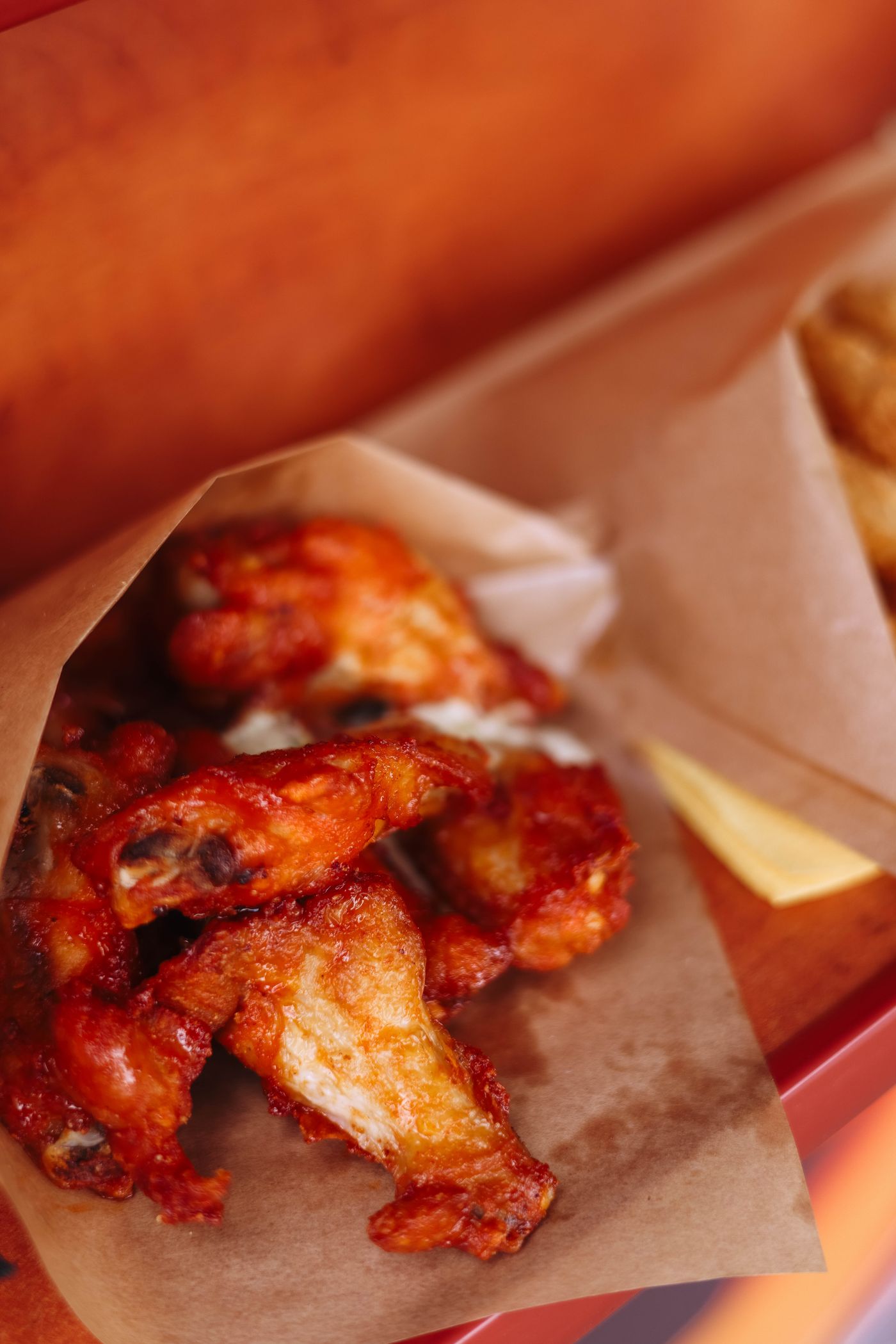
Why Buffalo Wings Are a Problem for Cats
Start with the bones. A wing has small, thin bones that splinter after cooking. The ASPCA says bones can injure a pet's intestines or block them, and a blockage may need surgery. The Merck Veterinary Manual counts bones among slowly digested foreign bodies that can cause an obstruction.
Then there is the sauce. Classic buffalo sauce is hot sauce melted into butter. Many bottled hot sauces and wing sauces list garlic powder, and some list onion powder. The Merck Veterinary Manual says cats are the most susceptible species to onion and garlic poisoning, and that concentrated forms such as powders are the usual cause. Hot sauce is also salty, and wing seasoning adds more salt on top. The ASPCA warns that too much salt can bring on vomiting, diarrhea, tremors and seizures.
The skin is fried and fatty, and the butter in the sauce adds more fat. The ASPCA notes that the oils and fats in nuts can cause vomiting, diarrhea and potentially pancreatitis in some pets. Boneless wings are breaded, fried and sauced the same way.
The blue cheese or ranch dip on the side brings dairy, and ranch seasoning is built on dried garlic and onion. WSAVA lists onions, garlic and dairy products among foods to keep from cats.
Signs to Watch For
According to the Merck Veterinary Manual, a cat with a blocked gut may stop eating, regurgitate, vomit, have diarrhea or become lethargic. A cat that took a piece of bone may also gag or paw at its mouth. Onion and garlic damage red blood cells slowly, so Merck notes signs such as weakness, fast breathing, pale or yellow gums and reddish urine can show up several days after the meal.
What to Do If Your Cat Ate Buffalo Wings
Call your veterinarian or the ASPCA Animal Poison Control Center at (888) 426-4435 right away, especially if a bone is missing or your cat licked a lot of sauce. Do not try to make your cat vomit unless a vet tells you to, since a bone fragment can do more damage coming back up. Bring the sauce bottle or takeout menu so the vet can check the seasonings.
If your cat has a medical condition or eats a special diet, ask your veterinarian before sharing any food from your plate.
Common Questions
Can cats eat chicken wing bones?
No. Cooked chicken wing bones are thin and can break into sharp pieces. The ASPCA says bones can injure or block a pet's intestines, and a blockage may need surgery. If your cat chewed or swallowed a wing bone, call your veterinarian for advice, and do not try to make your cat vomit unless the vet tells you to.
Can cats eat boneless wings?
Boneless wings are still a poor choice for a cat. They are breaded, fried and coated in the same buttery hot sauce, which often contains garlic powder and a lot of salt. The Merck Veterinary Manual says cats are the species most sensitive to onion and garlic. If you want to share chicken, set aside a plain piece of cooked breast before any sauce goes on.
Can cats eat hot sauce?
No. Hot sauce is mostly peppers, vinegar and salt, and many brands add garlic or onion powder. The ASPCA warns that excess salt can cause vomiting, diarrhea, tremors and seizures, and that garlic and onion can damage red blood cells in cats. A cat has no need for chili heat either. Wipe up spills and keep wing plates out of reach.
Can cats eat blue cheese or ranch dressing?
It is better not to share either one. WSAVA lists milk and dairy products among foods to keep from cats because many cats are lactose intolerant. Ranch dressing is made with dried garlic and onion, which the Merck Veterinary Manual says are most concentrated in powdered form. A lick may cause only an upset stomach, but a larger amount deserves a call to your vet.
What should I do if my cat ate a buffalo wing?
Call your veterinarian or the ASPCA Animal Poison Control Center at (888) 426-4435. Tell them whether a bone is missing and how much sauce your cat ate. Over the next few days, watch for vomiting, a poor appetite, lethargy or a cat that strains in the litter box. Merck notes that signs of onion and garlic damage can take several days to appear.