Can Cats Eat Feta Cheese?
By Pettings · Sources checked Nov 2, 2026
No. Keep feta cheese away from cats. Feta is cured in salty brine, and the ASPCA warns that excessive salt can cause increased thirst and urination and, in larger amounts, electrolyte problems. It is also a dairy food, which WSAVA lists among the treats to avoid for cats because many are lactose intolerant.
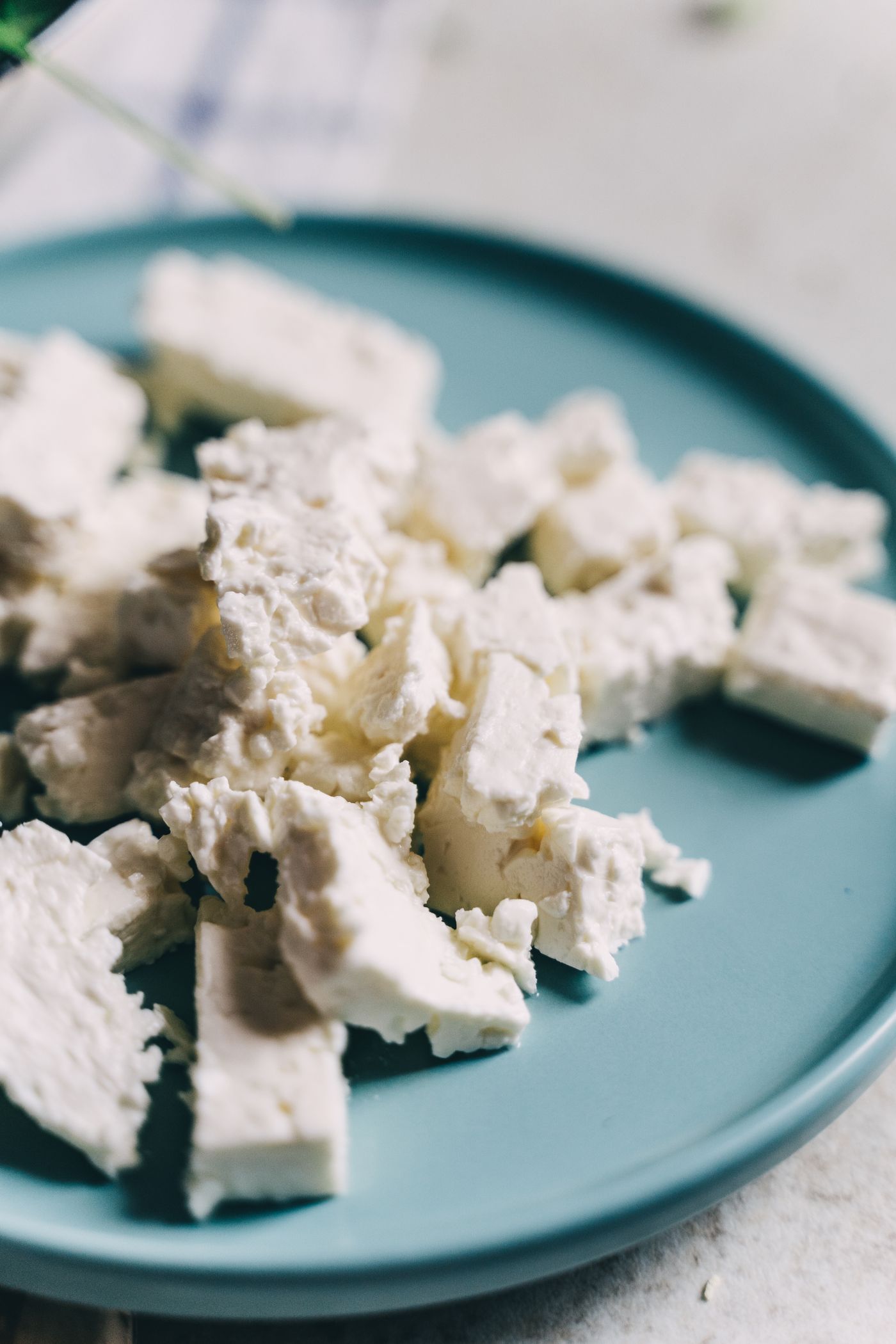
Why Feta Cheese Is a Problem for Cats
Salt is the main concern. Feta is made by storing curds in brine, so it tastes noticeably saltier than mild cheeses. The ASPCA's guide to people foods to avoid lists salt and excessively salty foods because high intake can upset a pet's fluid and electrolyte balance. A cat is small, so a salty bite counts for more than it would for a person.
Feta also contains lactose and milk fat. The ASPCA explains that pets do not have significant amounts of lactase, so dairy can cause diarrhea. Calories pile up fast as well: the USDA lists a cup of crumbled feta at 398 calories, which means a single tablespoon is about 25 calories. That is a 10-pound cat's whole daily treat allowance of roughly 22 to 25 calories in one bite.
Feta rarely shows up alone. Greek salads and spinach pies often come with onion or garlic, and marinated feta sits in seasoned oil. The ASPCA lists onions and garlic as able to damage a cat's red blood cells, so a salad plate left on the counter is a bigger worry than plain cheese.
Signs to Watch For
The ASPCA describes increased thirst and urination as effects of too much salt. With larger amounts, it lists vomiting, diarrhea, depression, tremors, and seizures, and severe cases can be fatal. Dairy alone tends to cause diarrhea and stomach upset. If onion or garlic was in the dish, the ASPCA notes that red blood cell damage can lead to anemia, which may not show up right away.
What to Do If Your Cat Ate Feta Cheese
If your cat ate more than a crumb, or the feta came from a dish with onion or garlic, call your veterinarian or the ASPCA Animal Poison Control Center at (888) 426-4435 right away. Do not try to make your cat vomit unless a vet tells you to. Bring the package or a list of the dish's ingredients, and estimate how much is missing. Make sure fresh water is available while you wait for advice.
If your cat has kidney disease, heart disease, or another condition that calls for limited salt, tell your veterinarian about any feta right away.
Common Questions
What happens if my cat eats feta cheese?
A small crumb of feta will most likely cause mild thirst or loose stool, if anything. Larger amounts bring more salt, and the ASPCA lists vomiting, diarrhea, depression, tremors, and seizures as signs of salt toxicosis in pets. Feta also contains lactose, which can upset digestion. Call your veterinarian or the ASPCA Animal Poison Control Center if your cat ate a sizable piece or shows any of these signs.
Why is feta worse for cats than other cheese?
Feta is cured in salty brine, so it carries more salt than mild cheeses like mozzarella. The ASPCA warns that excessive salt can cause increased thirst and urination and electrolyte problems in pets. Feta also often comes mixed into dishes with onion, garlic, or seasoned oil. Those extras add their own problems, which is why feta is kept off the treat list entirely.
Can cats eat Greek salad with feta?
No, keep Greek salad away from cats. Along with salty feta, these salads often include red onion and dressings with garlic, and the ASPCA lists onions and garlic as able to damage a cat's red blood cells and cause anemia. Olives and dressing add more salt and oil. If your cat ate some, call your veterinarian or the ASPCA Animal Poison Control Center and mention every ingredient.
Can kittens eat feta cheese?
No, kittens should not eat feta. A kitten's small body is more easily affected by salt, which the ASPCA warns can cause thirst, vomiting, and more serious signs in larger amounts. Feta is also dairy, and many cats are lactose intolerant, according to the Cornell Feline Health Center. If a kitten ate feta, call your veterinarian and say roughly how much it ate.
How much salt is too much for a cat?
There is no single household number to rely on, because the effect depends on the cat's size and the amount of salt eaten. The ASPCA says excessive salt can cause increased thirst and urination, and larger amounts can lead to vomiting, tremors, seizures, and death. A complete cat food already contains the sodium a cat needs, so salty human foods like feta are best left out.