Can Cats Eat Meatballs?
By Pettings · Sources checked Nov 2, 2026
No. Keep meatballs away from cats. The meat itself is not the problem, but nearly every meatball recipe adds onion, garlic or both. The ASPCA lists onions and garlic as foods to keep from pets and says cats are more susceptible to them than dogs. The Merck Veterinary Manual reports that cats have been poisoned after eating less than a teaspoon of cooked onion.
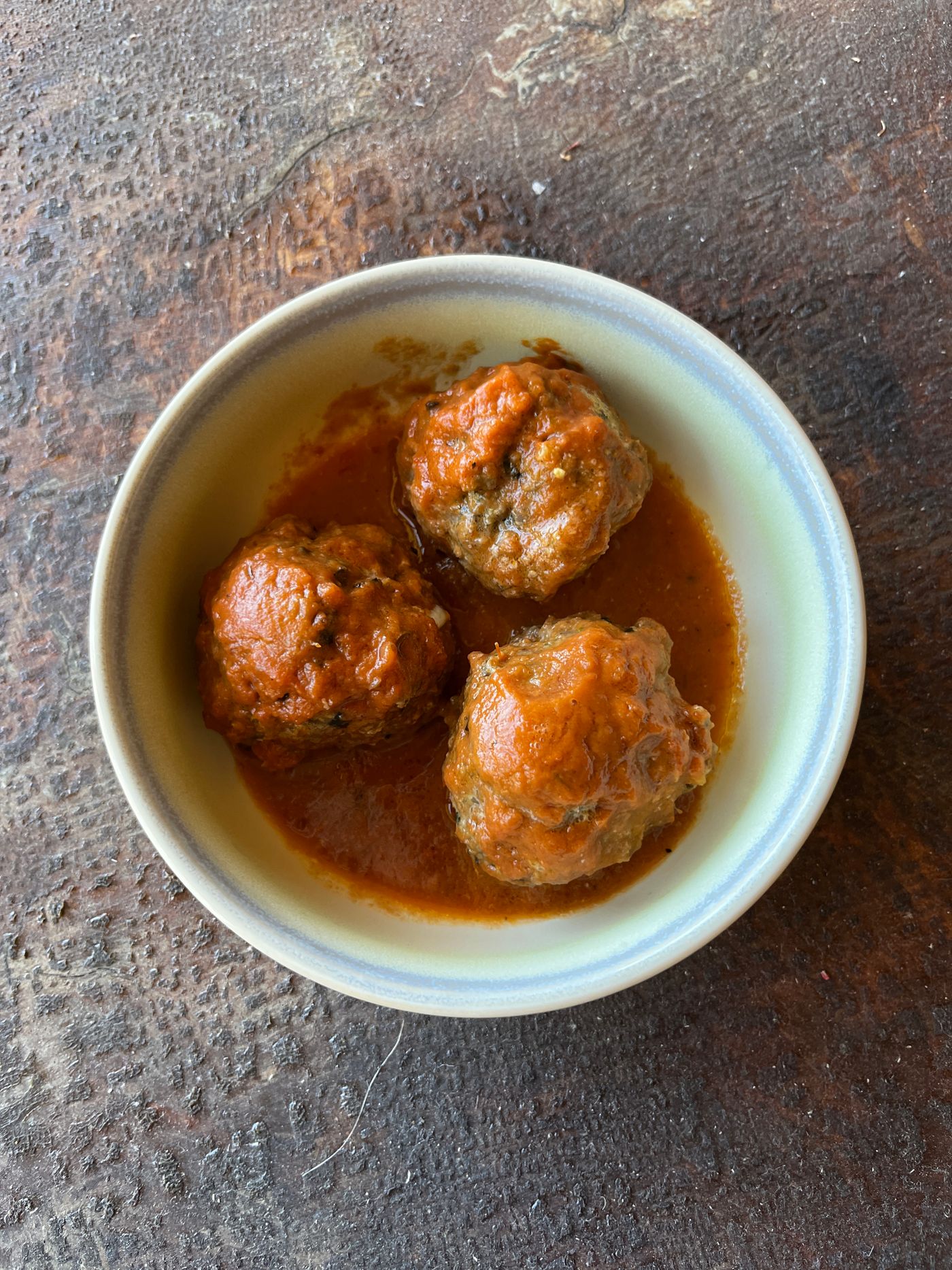
Why Meatballs Are a Problem for Cats
Onion and garlic damage red blood cells in cats. Merck explains that cooking does not make them harmless: cats and dogs have been affected by raw, cooked, dehydrated and granulated forms, and concentrated powders cause most cases. Garlic is three to five times more potent than onion, according to Merck. In a meatball, these ingredients are minced and mixed through the meat, so there is no way to pick them out. Meatloaf is made the same way and often adds a ketchup glaze. Meatballs also tend to include breadcrumbs, cheese, egg and salt, and they are often served in tomato sauce that contains more onion and garlic. Frozen and restaurant meatballs usually list onion or garlic powder on the label. Tufts Petfoodology notes that high fat foods and foods pets do not usually eat can bring on vomiting or diarrhea in pets with a sensitive stomach. WSAVA advises against table scraps as cat treats. Plain cooked ground beef with nothing added gives a cat the meat without the risk.
Signs to Watch For
Signs from onion or garlic are often delayed. According to the ASPCA, the plants cause stomach irritation followed by red blood cell damage that can lead to anemia. Merck says this damage typically develops three to five days after the meal. Watch for weakness, low energy, pale or yellow gums, a fast heartbeat or breathing, reluctance to move, and red or brown urine. Vomiting or diarrhea may show up sooner.
What to Do If Your Cat Ate Meatballs
Call your veterinarian or the ASPCA Animal Poison Control Center at (888) 426-4435 right away, even if your cat seems fine, because signs can take days to appear. Do not try to make your cat vomit unless a veterinarian tells you to. Bring the package or write down the recipe, including how much onion or garlic it contained and how much your cat ate. Your vet may recommend blood tests over the following days.
If your cat has a medical condition or eats a special diet, ask your veterinarian before sharing any people food.
Common Questions
Can cats eat meatloaf?
Cats should not eat meatloaf. Most recipes mix in chopped onion, garlic or onion soup mix, and the Merck Veterinary Manual reports that cats have been poisoned by less than a teaspoon of cooked onion. Meatloaf also contains salt, breadcrumbs and often a sweet ketchup glaze. If your cat ate some, call your veterinarian, since signs from onion can take days to appear.
Can cats eat meatballs without onion?
A plain meatball made only from cooked meat with no onion, garlic, salt or cheese would not be a concern in a small amount. Most meatballs are not made that way, though, and store-bought ones usually list onion or garlic powder. If you want to share, cook a spoonful of plain lean ground beef and drain the fat instead of making special meatballs.
How much onion is toxic to cats?
Very little. The Merck Veterinary Manual reports that cats have been poisoned after eating less than a teaspoon of cooked onion, and that garlic is three to five times more potent than onion. Concentrated powders are the most common cause. Because a meatball can hide a meaningful amount, call your veterinarian if your cat ate one, even if it seems fine.
Can cats eat Swedish meatballs?
Cats should not eat Swedish meatballs. They are usually made with onion and served in a cream gravy with butter, salt and broth. The ASPCA lists onions as a food to keep from pets and notes that many pets lack the lactase to digest dairy well. If your cat ate some, watch for vomiting and call your veterinarian for advice.
What happens if my cat ate a meatball?
If the meatball contained onion or garlic, your cat could develop red blood cell damage over the next few days. The ASPCA says these plants can cause stomach irritation and anemia, and the Merck Veterinary Manual lists weakness, pale gums, rapid breathing and dark urine as signs. Call your veterinarian or the ASPCA Animal Poison Control Center for advice right away.