Can Cats Eat Pumpkin?
By Pettings · Sources checked Nov 2, 2026
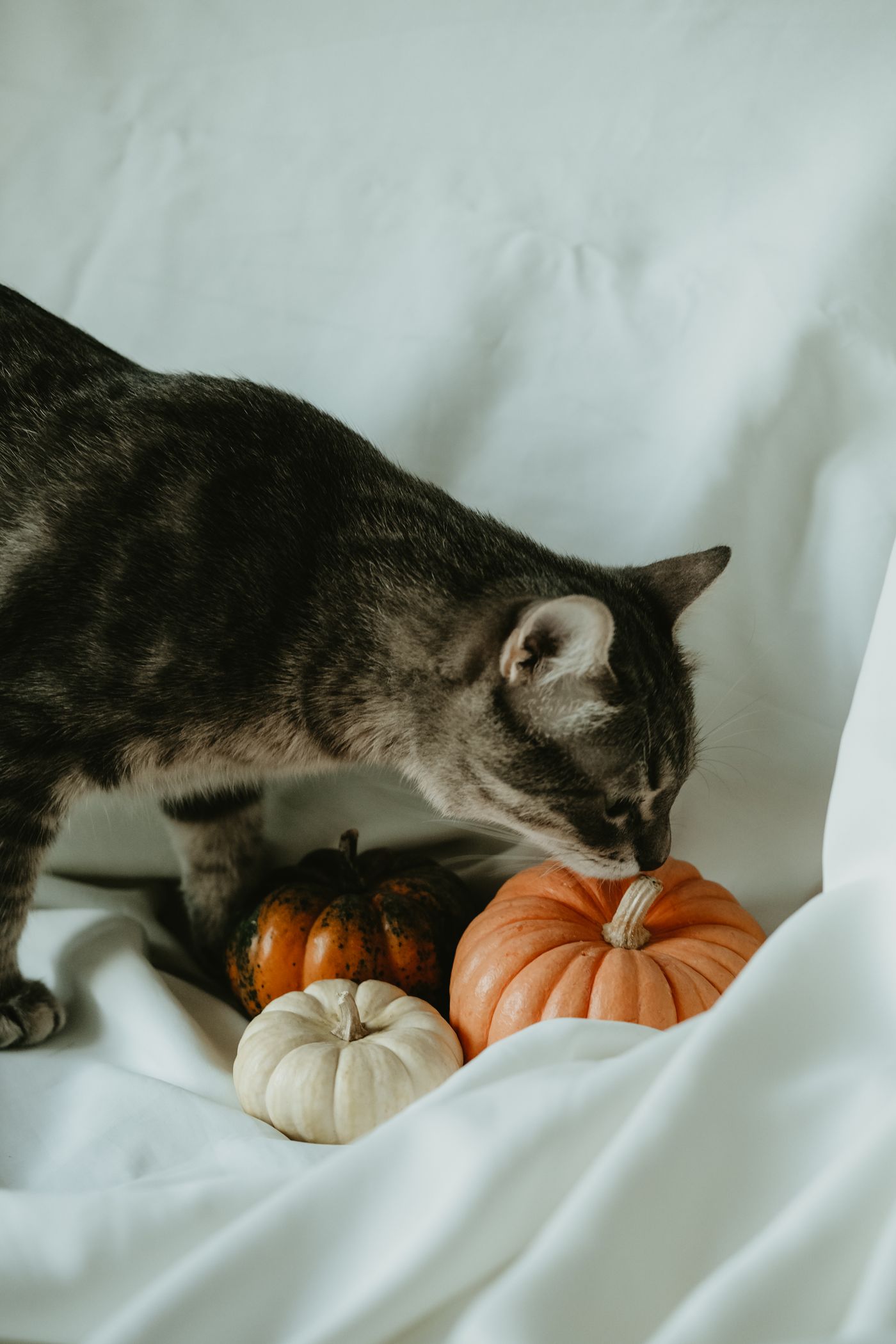
Cats can eat small amounts of plain cooked pumpkin, and plain canned pumpkin puree counts. Tufts Petfoodology lists unsalted canned pumpkin among its low-calorie treats for dogs and cats. It is often given for stool problems, but Tufts cautions that the amount of fiber in pumpkin is small.
What Pumpkin Offers a Cat
Pumpkin is mostly water and carbohydrate with some fiber, a mix of soluble and insoluble types according to Tufts. Tufts Petfoodology measures canned pumpkin at about 0.4 grams of fiber per tablespoon, compared with 3.5 grams for psyllium husk. To match the fiber in one high-fiber therapeutic diet, Tufts calculated that a cat would need more than 2 1/2 cups of pumpkin a day, far more than any cat should eat.
The Cornell Feline Health Center lists canned pumpkin as one fiber option vets use for constipation, along with psyllium. Fiber needs depend on the cat and the problem, though, and Tufts warns that pumpkin may not help and can sometimes cause problems.
How Much Pumpkin Can a Cat Have?
WSAVA says treats should be less than 10% of daily calories, about 22 to 25 calories a day for a 10-pound adult cat. Tufts gives plain canned pumpkin 83 calories per cup, so 1 to 2 teaspoons is about 2 to 4 calories. That fits the allowance and should count as part of the day's food.
Start with half a teaspoon mixed into wet food. Too much can loosen stool. Kittens, seniors, and cats with diabetes, kidney disease, urinary stones, pancreatitis, or food allergies should have treats chosen with their veterinarian.
How to Serve It
Buy canned pumpkin that lists only pumpkin, and check that it has no added salt. Tufts found about 12 milligrams of sodium per cup in unsalted canned pumpkin, but nearly 600 milligrams in some salted brands. Pumpkin pie filling, sometimes sold as pumpkin pie mix, is a different product. It has added sugar and spices, and Tufts lists it at up to 281 calories per cup. Pumpkin pie, pumpkin bread, and pumpkin spice drinks are out too.
Fresh pumpkin works if you bake or steam the flesh until soft and mash it. Leave out the skin, stem, and stringy pulp. Spoon what you need into a small container and refrigerate the rest for a few days.
If your cat is constipated or has diarrhea, call your veterinarian rather than relying on pumpkin, and ask before adding it to any special diet.
Common Questions
Is pumpkin good for cats with constipation?
Pumpkin can add a little fiber, but it is not a reliable cure for constipation in cats. The Cornell Feline Health Center lists canned pumpkin as one fiber option, while Tufts Petfoodology notes it has only about 0.4 grams of fiber per tablespoon. A constipated cat may need more water, a high-fiber diet, or treatment. See your veterinarian if your cat strains or has not passed stool in a couple of days.
How much pumpkin should I give my cat for diarrhea?
There is no proven pumpkin dose for diarrhea in cats, so talk to your veterinarian first. Tufts Petfoodology warns that pumpkin may not help with diarrhea and can sometimes cause problems, because its fiber content is low and varies. Diarrhea that lasts more than a day needs a vet visit.
Can cats eat pumpkin pie filling?
No, skip pumpkin pie filling for cats. Pie filling, or pumpkin pie mix, contains added sugar and spices, and Tufts Petfoodology lists it at up to 281 calories per cup, compared with 83 calories for plain canned pumpkin. Check the label before you open the can. The only ingredient should be pumpkin, with no salt added.
Can cats eat raw pumpkin?
Raw pumpkin is hard and stringy, so cooked is a better choice for cats. Bake or steam fresh pumpkin until soft, scoop out the flesh, and mash it. Leave out the skin, stem, and pulp. Plain canned pumpkin is already cooked and is the simplest option. Tufts Petfoodology lists unsalted canned pumpkin as a low-calorie treat.
Can cats eat pumpkin seeds?
Pumpkin seeds are an occasional treat at most, and only one or two plain, shelled, unsalted seeds at a time, ground up. Whole seeds in the shell are hard and could be a choking risk, and roasted seeds sold as snacks are often salted or seasoned. The plain flesh is the simpler part to share. If your cat swallowed a few seeds, watch for vomiting or straining in the litter box and call your vet if you see either.
Sources
- Tufts Petfoodology: The problem with pumpkin
- Tufts Petfoodology: Fiber frustrations
- Tufts Petfoodology: Treat options for dogs and cats without unbalancing their diet
- Cornell Feline Health Center: Constipation
- Cornell Feline Health Center: Feeding your cat
- WSAVA: Feeding treats to your cat
