Can Cats Eat Rotisserie Chicken?
By Pettings · Sources checked Nov 2, 2026
Rotisserie chicken is an occasional treat at most, and only the skinless, boneless breast meat. The skin carries a seasoning rub that often contains garlic powder, onion powder and salt, and many store-bought chickens are injected with a salty brine. The Merck Veterinary Manual says cats are the species most susceptible to onion and garlic.
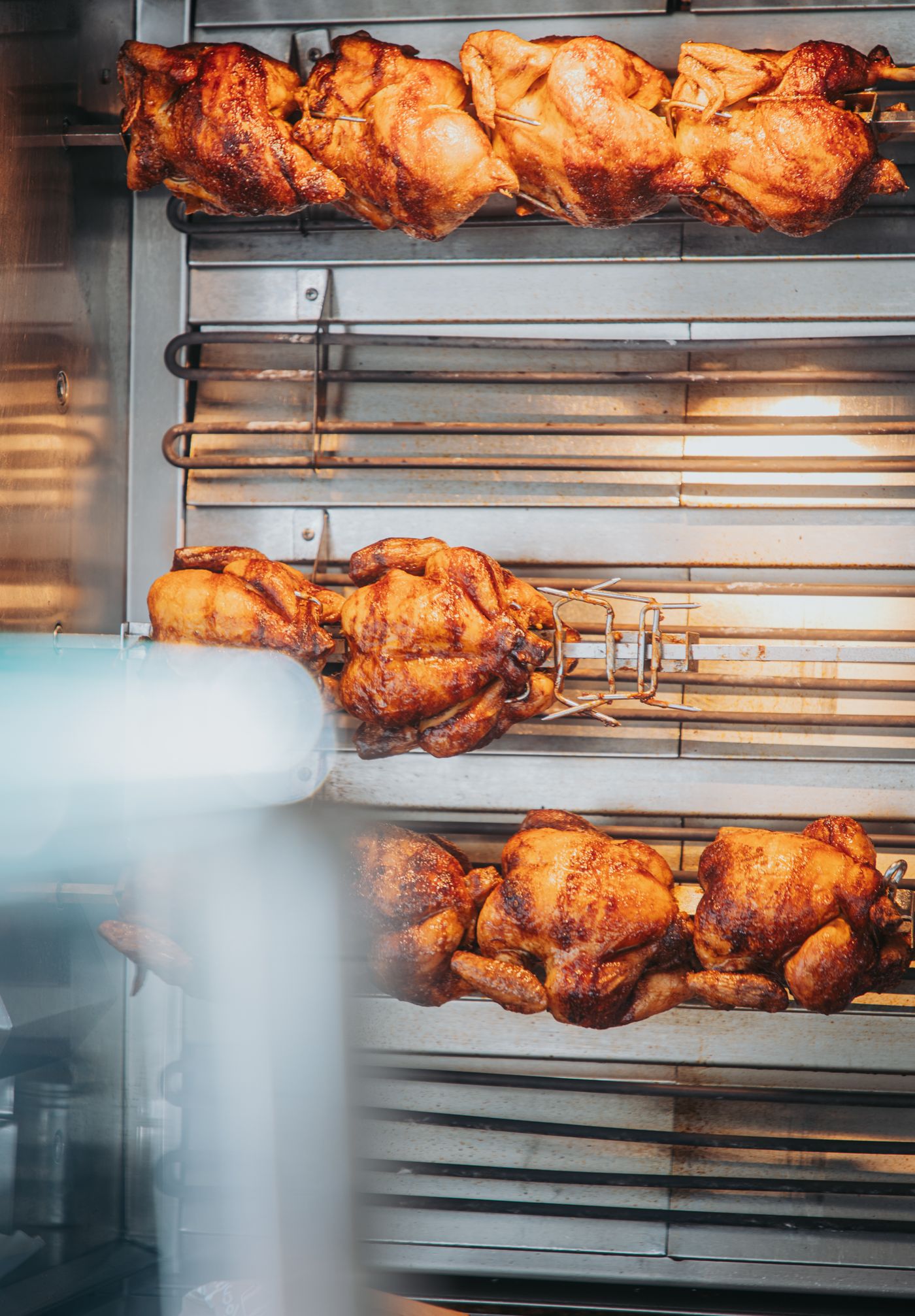
What Rotisserie Chicken Offers a Cat
Chicken is animal protein, which suits a cat. The Cornell Feline Health Center describes cats as obligate carnivores that evolved to eat prey high in protein with a moderate amount of fat. A bite of chicken is still a treat, though, and not a balanced meal. Cornell says treats are usually not complete nutrition and should be fed only occasionally.
The problem with a rotisserie bird is what has been added. Store chickens are usually seasoned with a rub and are often marinated or injected with a solution of water, salt and flavorings, so even the inside meat carries more salt than chicken you roast plain.
How Much Rotisserie Chicken Can a Cat Have?
For a 10-pound adult cat with no food allergy or medical condition, about 1/2 ounce of skinless breast meat is enough, roughly 2 tablespoons shredded. WSAVA lists lean cooked chicken breast at about 47 calories per ounce, so that portion is about 23 calories. WSAVA advises keeping treats below 10 percent of daily calories, which is about 22 to 25 calories for a cat of 9 to 11 pounds. That makes this portion the whole treat allowance for the day, and it should replace part of the cat's food, not be added on top.
Kittens, seniors and cats with kidney disease, heart disease, pancreatitis or a food allergy should only get it if the vet agrees.
How to Serve It
Pull the skin off and set it aside, since the seasoning, fat and salt concentrate there. The ASPCA says onion and garlic can damage red blood cells in pets, and the Cornell Feline Health Center lists excessive dietary fat among the factors associated with pancreatitis in cats. Take meat from the middle of the breast, away from the skin and the drippings.
Remove every bone. The ASPCA warns that bones can injure or block a pet's digestive tract, sometimes badly enough to need surgery. Cooked chicken bones are brittle and splinter easily.
Avoid lemon pepper, barbecue, garlic herb and other flavored birds, and do not share the pan juices or gravy. Shred it and serve it at room temperature. Throw away the carcass where your cat cannot reach it.
If your cat has a medical condition or eats a special diet, ask your veterinarian before offering rotisserie chicken.
Common Questions
Can cats eat rotisserie chicken skin?
No. The skin holds most of the seasoning rub, which often includes garlic powder, onion powder and salt, along with a lot of fat. The Merck Veterinary Manual says cats are the species most susceptible to onion and garlic. Remove the skin and offer only a small piece of plain breast meat from the inside.
Can cats eat rotisserie chicken bones?
No. Cooked chicken bones are brittle and can splinter. The ASPCA says bones can injure or block a pet's digestive tract, sometimes needing surgery. If your cat got into the carcass or chewed a bone, call your veterinarian for advice, even if your cat seems fine for now.
Can cats eat rotisserie chicken every day?
Not as a daily habit. Store rotisserie chicken is usually saltier than plain chicken because of its brine and rub. WSAVA lists lean chicken breast at about 47 calories per ounce and advises keeping treats under 10 percent of daily calories, so about 1/2 ounce of skinless breast already uses a 10-pound cat's treat allowance. Offer it occasionally.
Can kittens eat rotisserie chicken?
Ask your vet first. Kittens need a food labeled complete for growth, and the Cornell Feline Health Center says nutritional needs change through life stages. If your vet agrees, a tiny shred of skinless, boneless breast meat is the most a kitten should get, with no skin, drippings or seasoning.
Why does my cat go crazy for rotisserie chicken?
Warm roasted chicken smells strongly of meat and fat, which is exactly what a cat is built to hunt for. The Cornell Feline Health Center describes cats as hunters that evolved to eat prey high in protein with moderate fat. Share a little skinless breast and keep the rest of the bird, and the bag it came in, out of reach.