Can Cats Eat Shallots?
By Pettings · Sources checked Nov 2, 2026
No. Keep shallots away from cats. WSAVA lists shallots alongside onions, leeks, garlic and chives as foods to avoid giving cats. Shallots are an Allium, and the ASPCA warns that Allium species can cause stomach irritation and damage to red blood cells that may lead to anemia, with cats more susceptible than dogs. The Merck Veterinary Manual says cats are the most susceptible species of all.
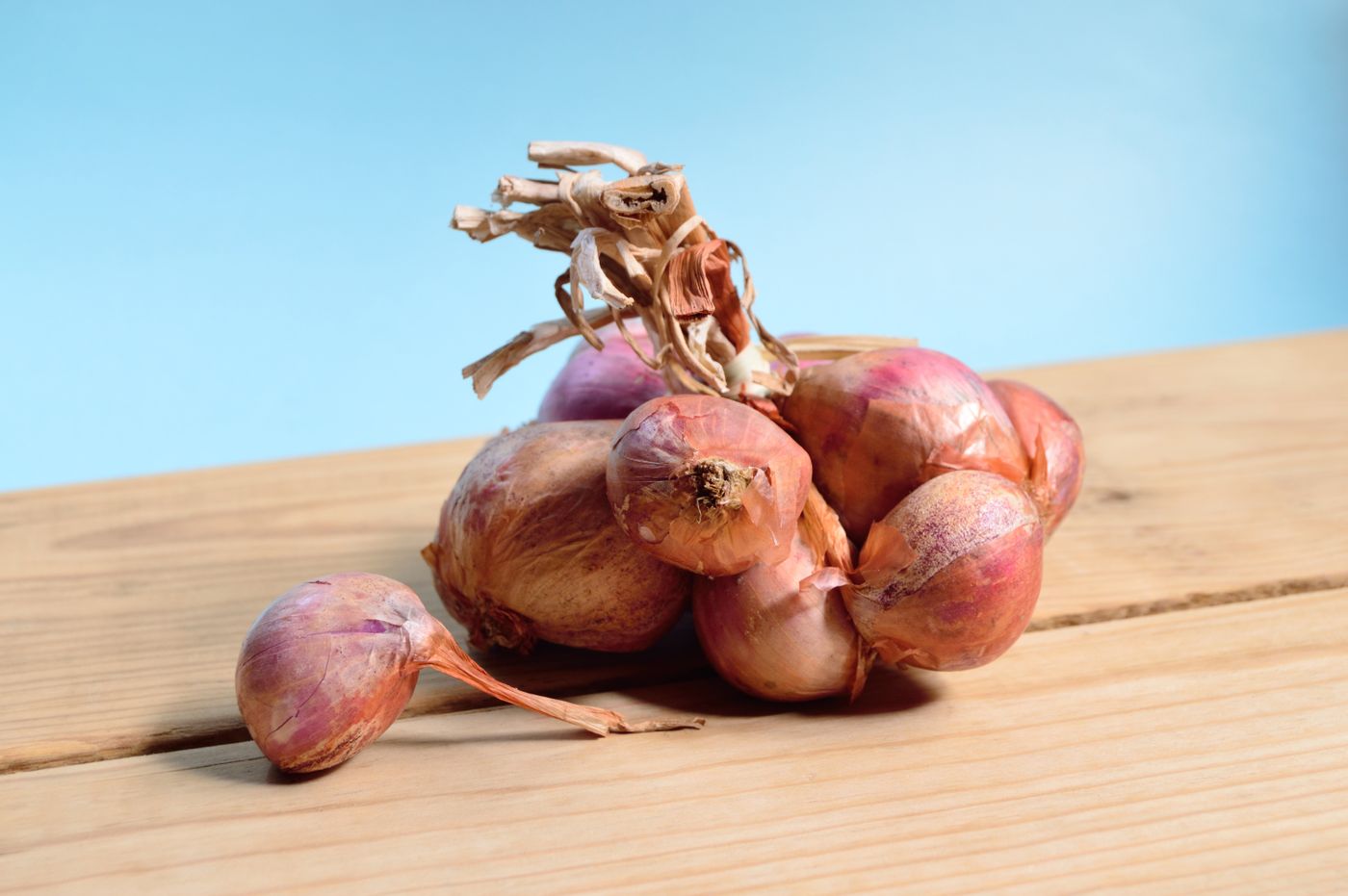
Why Shallots Are a Problem for Cats
Shallots carry the same kind of sulfur compounds found in onions. The Merck Veterinary Manual explains that these compounds are released when an Allium is chopped, cooked or chewed, and that they damage red blood cells, which form Heinz bodies and break apart. The ASPCA names n-propyl disulfide as the toxic principle in onion. Merck reports that less than a teaspoon of cooked onion has caused toxicosis in a cat, and shallots should be treated with the same caution. Shallots are a common base in restaurant and home cooking. They go into vinaigrettes, pan sauces, butter sauces, gravies, stuffings and braises, often minced so fine you cannot pick them out. Crispy fried shallots are used as a topping on salads and noodle dishes. If a dish was made with shallots, do not share any part of it, including the sauce.
Signs to Watch For
The ASPCA lists vomiting, breakdown of red blood cells, blood in the urine, weakness, an elevated heart rate and panting for onion. The Merck Veterinary Manual adds lethargy, loss of appetite, fast breathing, yellow gums or eyes, low tolerance for activity and collapse for Allium poisoning in general. Merck notes that signs usually show up a few days after exposure, once a lot of red blood cell damage has occurred.
What to Do If Your Cat Ate Shallots
Call your veterinarian or the ASPCA Animal Poison Control Center at (888) 426-4435 right away, even if your cat looks normal. Do not try to make your cat vomit unless a vet tells you to. The Merck Veterinary Manual lists hydrogen peroxide as a way to induce vomiting in dogs only; for cats it lists a drug given by injection at the clinic. Bring the recipe or package so the vet can judge how much shallot your cat ate. Your vet may want to recheck blood work over the following days.
If your cat has a medical condition or eats a special diet, ask your veterinarian which treats fit before sharing any human food.
Common Questions
Are shallots worse than onions for cats?
Treat them the same. Shallots and onions are both Allium plants, and the Merck Veterinary Manual describes the same red blood cell damage for the whole group, with cats the most susceptible species. WSAVA lists shallots and onions together among foods never to give cats. Any amount calls for a call to your veterinarian.
Can cats eat food cooked with shallots?
No. Cooking does not remove the risk; the Merck Veterinary Manual says Allium plants can cause toxicosis raw, cooked, dehydrated or granulated. Pan sauces, gravies and vinaigrettes made with shallots carry the same compounds as the shallot itself. Keep plates and pans out of reach until they are cleaned.
Can cats eat crispy fried shallots?
No. Fried shallots are still shallots, and they are also oily and often salted. The ASPCA warns that onion-family plants can damage a cat's red blood cells and that excess salt can cause vomiting, diarrhea and increased thirst. Call your veterinarian if your cat got into a container of them.
What should I do if my cat licked a shallot vinaigrette?
Call your veterinarian or the ASPCA Animal Poison Control Center at (888) 426-4435 and describe the amount. A lick of dressing contains far less shallot than a bite of the bulb, but cats are the species most susceptible to Allium poisoning, according to the Merck Veterinary Manual. Let a professional decide whether your cat needs to be seen.
What are the symptoms of shallot poisoning in cats?
Signs of Allium poisoning include vomiting, weakness, lethargy, loss of appetite, fast breathing, a fast heart rate, panting, pale or yellow gums and red or brown urine, according to the ASPCA and the Merck Veterinary Manual. These signs often appear a few days after the cat ate the shallot, so call your vet before they start.