Can Cats Eat Stuffing?
By Pettings · Sources checked Nov 2, 2026
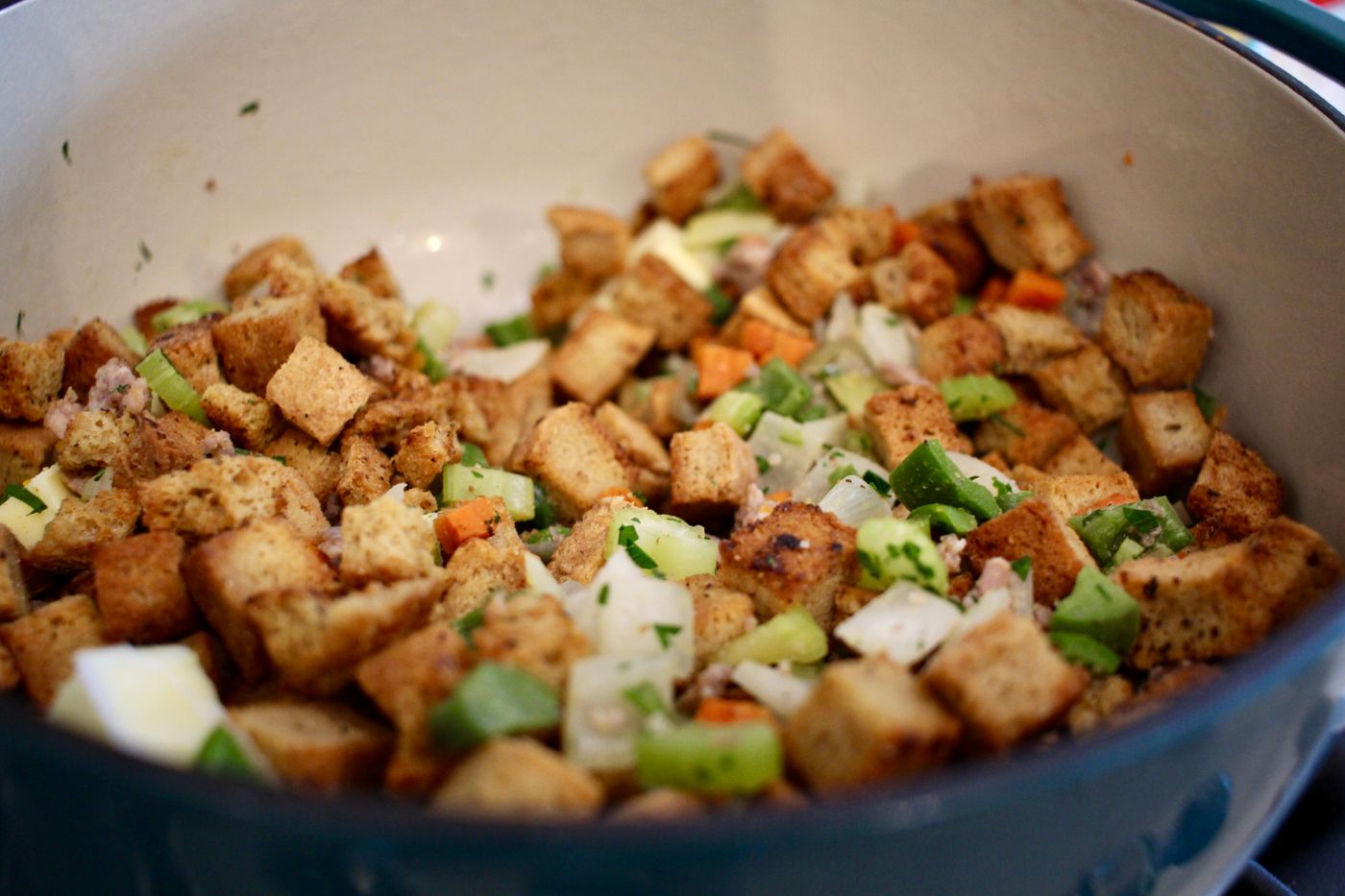
No. Keep stuffing away from cats. Thanksgiving stuffing, also called dressing, is bread cubes cooked with onion, celery, butter, broth, salt and herbs. Tufts veterinary nutritionists list onions and garlic among the holiday foods pets should avoid.
Why Stuffing Is a Problem for Cats
Onion is the base of almost every stuffing. Cooks saute chopped onion in butter before folding in the bread, and some add garlic or leeks too. Boxed stuffing mixes are seasoned with onion powder and dried onion. The Merck Veterinary Manual says cats are the most susceptible species to onion and garlic poisoning, and reports poisoning after less than a teaspoon of cooked onion. Dried and powdered forms are more concentrated. The damage is to red blood cells and can lead to anemia.
Salt and fat come next. Stuffing is moistened with broth or bouillon and baked with butter. The ASPCA warns that too much salt can cause vomiting, diarrhea, tremors and seizures. Tufts suggests staying away from vegetables made with lots of butter, sauces, salt and other seasonings, and notes that pets with a sensitive stomach can easily develop diarrhea or vomiting from high fat foods.
Many family recipes add more. Sausage stuffing adds fat and more salt. Cornbread dressing can include bacon drippings. Sweet versions add raisins, dried cranberries or chopped apples, and WSAVA lists grapes and raisins among foods toxic to cats. Pecans and walnuts are common too, and the ASPCA says the oils and fats in nuts can cause vomiting and diarrhea, and potentially pancreatitis in some pets.
A USDA table lists dry bread stuffing mix at about 109 calories per ounce before butter and broth are added. A 10-pound cat gets only about 22 to 25 treat calories a day, according to WSAVA.
Signs to Watch For
A cat that ate stuffing may seem fine at first. The Merck Veterinary Manual says signs of onion poisoning usually appear several days after the meal, and include weakness, lethargy, a poor appetite, fast breathing, pale or yellow gums and reddish urine. Salt and fat can cause vomiting, diarrhea or heavy drinking sooner. If the stuffing had raisins, watch for vomiting, low energy or changes in urination.
What to Do If Your Cat Ate Stuffing
Call your veterinarian or the ASPCA Animal Poison Control Center at (888) 426-4435 right away, even if your cat looks normal. Do not try to make your cat vomit unless a vet tells you to. Write down the recipe or keep the stuffing box so the vet knows how much onion, garlic, raisin or nut was in it.
Cats with a medical condition or a special diet should stick to the food their veterinarian recommends, holidays included.
Common Questions
Can cats eat Thanksgiving stuffing?
No. Thanksgiving stuffing is built on sauteed onion, celery, butter, broth and herbs, and boxed mixes add onion powder. The Merck Veterinary Manual says cats are the species most sensitive to onion and garlic, and reports poisoning after less than a teaspoon of cooked onion. Share a bite of plain turkey breast instead, and keep the stuffing dish out of reach.
Can cats eat dressing?
No. Dressing is the same dish as stuffing baked in a pan instead of inside the bird, so it has the same onion, butter, broth and salt. Cornbread dressing may also have bacon drippings or sausage. The ASPCA warns that salty foods can cause vomiting, tremors and seizures, and onion can damage a cat's red blood cells. Keep the pan covered while it cools.
Can cats eat stuffing with raisins or cranberries?
Stuffing with raisins should not be shared. WSAVA lists grapes and raisins among foods toxic to cats, and Merck notes kidney failure after raisins has been reported in one cat as well as in dogs. Dried cranberries are not on those lists, but the stuffing around them still contains onion. If your cat ate stuffing with raisins, call your veterinarian.
Can cats eat sage?
Sage on its own is not the main concern in stuffing. The trouble is that sage is usually cooked together with onion, butter and salt. The Merck Veterinary Manual says cats are the species most sensitive to onion and garlic. Do not give your cat any part of a seasoned stuffing, and ask your veterinarian before offering any herb on purpose.
How long after eating stuffing would my cat get sick?
Stomach upset from butter and salt can start within hours, with vomiting or diarrhea. Onion damage is slower. The Merck Veterinary Manual says hemolytic anemia usually develops three to five days after exposure, so a cat can look normal at first. Call your veterinarian as soon as you know your cat ate stuffing, before any signs appear.