Can Cats Eat Tuna Salad?
By Pettings · Sources checked Nov 2, 2026
No. Keep tuna salad away from cats. Most tuna salad is tuna stirred with mayonnaise, chopped onion, celery, pickle relish, mustard, salt and pepper, and the onion alone is reason enough to keep the bowl out of reach.
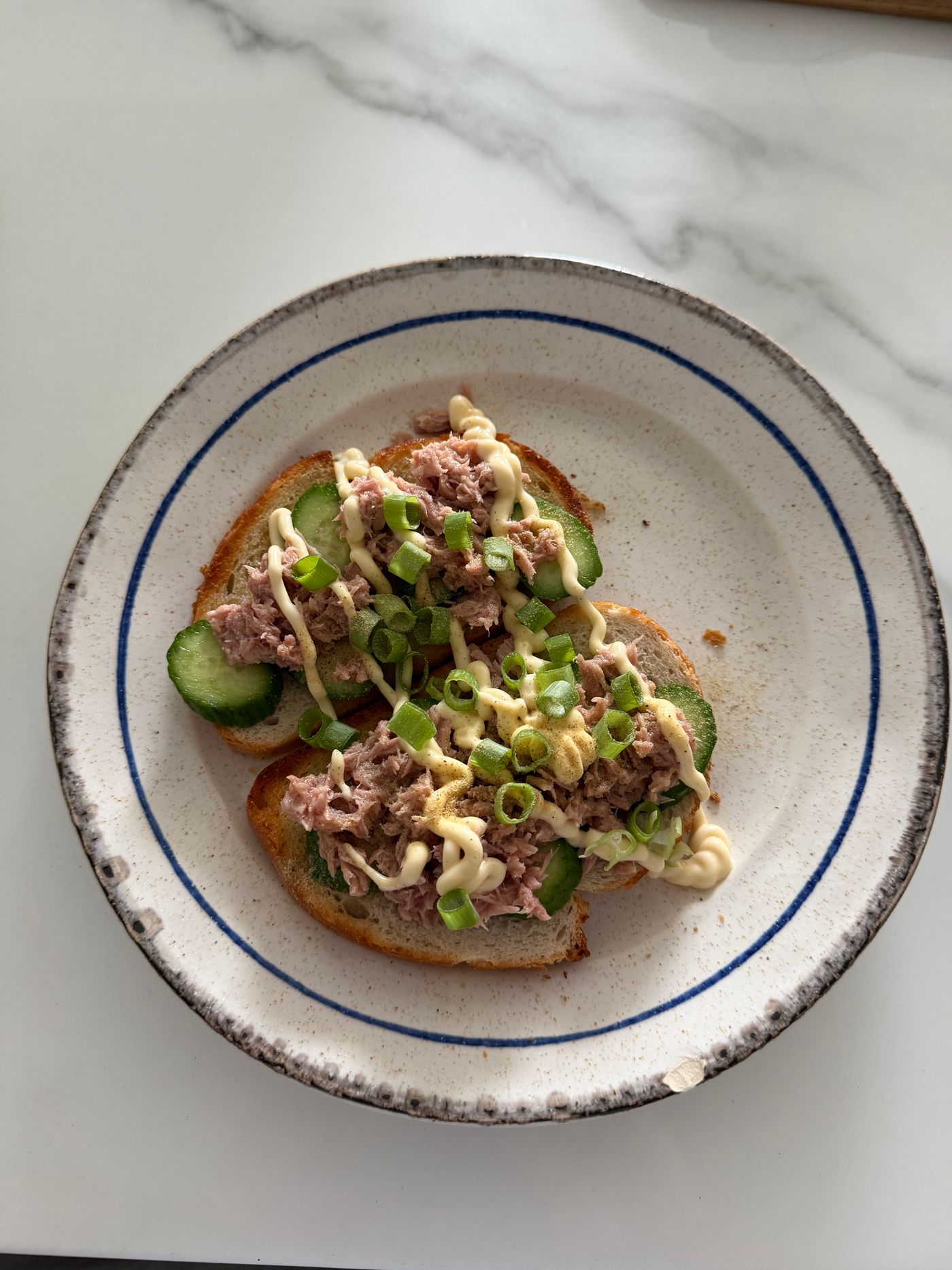
Why Tuna Salad Is a Problem for Cats
Onion is a standard tuna salad ingredient, either raw and chopped fine or as onion powder in the dressing. Some recipes add garlic powder, scallions or chives. The Merck Veterinary Manual says cats are the most susceptible species to onion and garlic poisoning, and that it damages red blood cells.
Mayonnaise is mostly oil and egg yolk. That much fat can cause vomiting or diarrhea in a cat that is not used to it. The ASPCA notes that the oils and fats in nuts can cause vomiting and diarrhea, and potentially pancreatitis in some pets. Pickle relish adds salt and sugar, and the ASPCA warns that too much salt can cause vomiting, tremors and seizures.
Chicken salad has the same base of mayonnaise, onion and celery, and many recipes add grapes, raisins or nuts. WSAVA lists grapes and raisins among foods toxic to cats, and the Merck Veterinary Manual notes kidney failure after grapes or raisins has been reported in one cat as well as in dogs.
Even plain tuna has limits. Cornell's Feline Health Center notes that some cats fed canned fish products meant for people have developed serious neurological problems, so tuna should never become a regular meal. WSAVA lists canned tuna in water at about 36 calories per ounce, more than a 10-pound cat's daily treat allowance of about 22 to 25 calories.
Signs to Watch For
If your cat ate tuna salad with onion or garlic, the Merck Veterinary Manual says signs of red blood cell damage usually show up several days later. Look for weakness, low energy, a poor appetite, fast breathing, pale or yellow gums and reddish urine. Mayonnaise and salt can cause vomiting or diarrhea sooner. If the salad had grapes or raisins, watch for vomiting, lethargy and changes in urination.
What to Do If Your Cat Ate Tuna Salad
Call your veterinarian or the ASPCA Animal Poison Control Center at (888) 426-4435 right away if the salad had onion, garlic, grapes or raisins, or if your cat ate more than a lick. Do not try to make your cat vomit unless a vet tells you to. Tell the vet everything that went into the bowl.
Cats with kidney disease, urinary problems or other medical conditions should only eat fish if their veterinarian approves it.
Common Questions
Can cats eat plain canned tuna?
A little plain tuna packed in water, with no salt or seasoning, can be an occasional treat. WSAVA lists canned tuna in water at about 36 calories an ounce, so about half an ounce, or one level tablespoon, fits a 10-pound cat's daily treat allowance. Cornell notes that cats fed canned fish meant for people as a main diet have developed neurological problems, so keep it occasional.
Can cats eat chicken salad?
No. Chicken salad is chicken mixed with mayonnaise, onion and celery, and many recipes add grapes, raisins or nuts. The Merck Veterinary Manual says cats are the species most sensitive to onion, and WSAVA lists grapes and raisins among foods toxic to cats. If you want to share chicken, set aside a plain cooked piece before it goes into the salad.
Can cats eat mayonnaise?
It is best not to share mayonnaise. It is mostly oil and egg yolk, and the ASPCA notes that the oils and fats in nuts can cause vomiting and diarrhea, and potentially pancreatitis in some pets. Flavored mayonnaise such as garlic aioli adds garlic, which the Merck Veterinary Manual says cats are especially sensitive to. A lick off a knife is unlikely to matter.
Can cats eat tuna in oil?
Tuna packed in water is the better choice. Tuna in oil adds fat and calories without anything a cat needs, and the extra oil can loosen a cat's stool. If you share tuna at all, drain it well and keep the portion small. WSAVA puts a 10-pound cat's daily treat allowance at about 22 to 25 calories, and a little tuna fills it quickly.
What happens if my cat eats tuna salad?
The tuna itself is unlikely to hurt your cat, but the onion in most tuna salad can. The Merck Veterinary Manual says onion damages red blood cells in cats, and signs like weakness, pale gums and reddish urine may not show for several days. Mayonnaise can also cause vomiting or diarrhea. Call your veterinarian and describe the recipe.